
Positive OT & Case Management Shortlisted for National Care Award
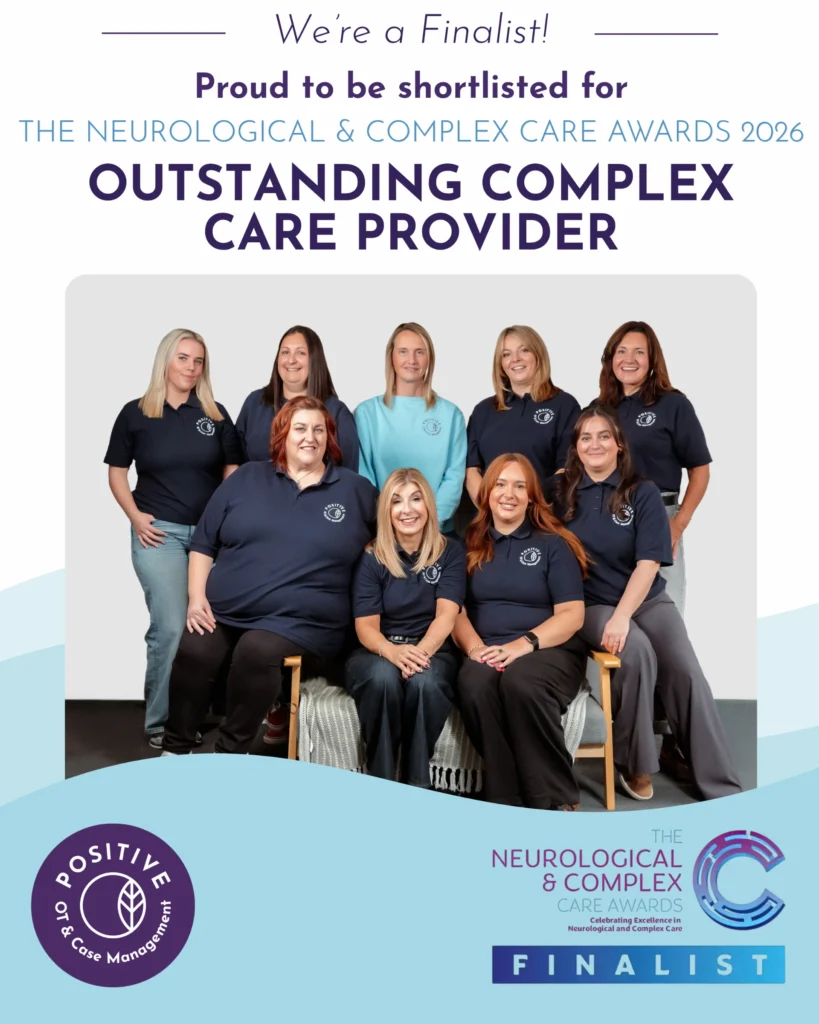
Positive OT & Case Management (POTCM) is delighted to announce that it has been shortlisted for the Outstanding Complex Care Provider category at the Neurological and Complex Care Awards 2026. Based in Yorkshire, POTCM provides Occupational Therapy and Case Management services across the North of England and the Midlands, supporting more than 200 adults and children with complex injuries and disabilities. Through a collaborative, multidisciplinary approach, the organisation delivers tailored rehabilitation programmes that help individuals achieve greater independence, wellbeing, and quality of life. Since its establishment in 2017, POTCM has grown into a team of more than 30 professionals and has built a reputation for delivering person-centred rehabilitation, investing in workforce development, and promoting best practice across the wider sector. Founder Jackie Chappel said: “We are incredibly proud to be recognised as a finalist in the Outstanding Complex Care Provider category. This shortlisting reflects the dedication, compassion and expertise of our entire team, who work tirelessly to support clients with complex needs to achieve meaningful outcomes and live fulfilling lives.” The shortlisting recognises POTCM’s commitment to coordinated, high-quality care, its investment in developing a skilled workforce, and its contribution to advancing standards across the rehabilitation and complex care sectors. The team looks forward to celebrating with fellow finalists at the awards ceremony in London on the 27th October.
The Role of Occupational Therapy: Breaking Tasks Down for Success

At Positive OT & Case Management, one of the key approaches we use when supporting clients is task grading, breaking larger, complex activities into smaller, more manageable steps. This is particularly effective when supporting individuals with everyday tasks such as meal planning, shopping, and meal preparation. For someone living with a brain injury or a complex condition, a task as seemingly simple as making lunch can involve multiple stages: planning what to eat, checking what ingredients are needed, organising the shop, and then safely preparing the meal. Each stage places cognitive and physical demands on the individual, and when these demands are not broken down, it can quickly become overwhelming. By grading tasks step by step, we help reduce that overwhelm, allowing individuals to focus on one manageable part of the process at a time. Alongside this, we often introduce compensatory strategies, such as checklists, visual planners, or pre-prepared recipe cards, to work around functional limitations and support success at every stage. Occupational Therapist, Kelly Macleod, explains: “We are currently working with one of our clients on breaking larger tasks into smaller, more manageable steps. This is a key occupational therapy approach, particularly when supporting meal planning, shopping, and meal preparation. Grading tasks in this way reduces both cognitive and physical demands, helping individuals stay organised and preventing feelings of overwhelm. Using compensatory strategies, such as checklists, visual planners, or pre-prepared recipe cards, can further enhance independence by working around functional limitations and supporting success at each stage of the process. Together, these approaches promote confidence, efficiency, and meaningful engagement in daily routines. Well done to our client, who is making fantastic progress toward more independent lunch preparation.” These approaches build confidence, promote independence, and help individuals re-engage meaningfully with their daily routines. It is a brilliant example of how the right support, broken into the right steps, can make all the difference.