Salam’s Story:The Importance of Collaborative Care
Dressed in a tuxedo and bouncing with excitement, Salam walked onto the stage in Leeds to collect his Yorkshire Children of Courage Award. For the Positive OT & Case Management team who nominated him, it was a moment that reflected years of shared support and Salam’s own remarkable resilience. Meet Salam Salam is 13 and the life and soul of any room. He loves to sing, enjoys company and has a real talent for making people laugh. He lives in a busy home, shared with his mum, his younger brother and sister. Salam has Down syndrome and, following a serious illness and prolonged hospital admission, he was fitted with a tracheostomy. He breathes independently through his tracheostomy and needs trained carers to support its safe management alongside his other care needs which include support with everyday activities, personal care, meals and staying safe in the community. https://www.youtube.com/watch?v=a9wM4qmomQo The choice of PCS and continuity of care Our Founder and Director, Jackie Chappel, was instructed as Salam’s case manager following a breakdown with his previous support. At that time, Salam needed substantial support with communication, emotional regulation and keeping safe. Changes to his routine and overstimulation could cause significant distress, sometimes expressed through throwing or breaking objects. Familiar people who understood his communication and recognised early signs of distress were therefore particularly important. Directly employing carers is a common route in case management and it can work very well for some but Salam’s previous arrangements had not provided the stability that he needed. Jackie took a different approach. She wanted a care agency that could think creatively, tailor its support to Salam and, above all, keep the same faces around him day after day. For a boy who struggled with change, stability had to be the foundation of his care. She considered several agencies before recommending Premium Care Solutions (PCS). The decision to use PCS reflected his individual circumstances and the need for a consistent team that could adapt as his needs changed. “Even though Salam didn’t have complex physical needs at that point, his challenging behaviour made his care complex, and we needed a provider who understood that. After speaking to a number of providers, I knew PCS would be the best fit, and it has absolutely been the best thing for Salam.” – Jackie Chappel From 2022, Jackie and PCS worked side by side to select support workers whose skills and temperament suited Salam. The early goal was simple: a predictable routine that helped him feel settled and manage his behaviour. His days were covered by two support workers and his nights by one. We kept the package under review, and when it became clear Salam was regularly awake through the night, the overnight support ratio was adapted from sleeping to waking so help was always at hand. When everything changed In 2023, routine surgery to remove papilloma from Salam’s throat was followed by a sudden and serious decline. He needed ventilation and spent roughly four months in intensive care at Leeds General Infirmary, and nine months in hospital in total. Salam had a tracheostomy in 2024, which marked a turning point in his recovery and quality of life. He breathes independently through it, without ventilator support. He had more energy, slept better and became more active. His care team therefore needed additional training to manage his tracheostomy safely and to be able to respond to any emergencies. This meant he now needed round-the-clock clinical care from two people at once. For POTCM, the question was how to get Salam home safely without losing the relationships that had taken so long to build. A brand-new clinical team would have meant starting again with strangers, something Salam and his family were not ready for. Together with PCS, we agreed the better path was to upskill the people who already knew him. While Salam was still on the ward, PCS were able to provide the appropriate clinical training and competency assessments to their team which enabled him to return home with familiar people. His existing support workers were fully trained and assessed in tracheostomy care, which included tube changes, spotting blockages and giving medication safely. For Jackie, “PCS’s flexibility and willingness to develop the existing team made a real difference. It meant Salam could return home to skilled people who already knew and understood him.” As Salam continues to grow, his needs continue to evolve, so part of our job is to ensure that his support network and evolves with him. His ongoing care needs provided by PCS are revisited every year and weighted towards potential emergencies. His team are continually trained to meet his needs. “We provide bespoke training for every client, because even if two children have the same condition, they are not the same.” Claire Stickley, Head of Children’s Services, PCS What we value most is that the core care team has barely changed. In Jackie’s experience, that kind of continuity is rare in care. “Salam has lifelong care needs, and his need for consistency will never change. Staff turnover at PCS is really low, and that’s absolutely what Salam needs.” Jackie Chappel Trainee Case Manager, Grace Raven, sums up the partnership: “PCS are collaborative and approachable. Open communication with them is key.” The wider support network Alongside his day to day care needs delivered by PCS, his wider multidisciplinary team play a valuable role in his ongoing development and progress. His MDT team, coordinated by POTCM, includes an occupational therapist, physiotherapist, speech and language therapist, dietitian and educational adviser. The full team have regular monthly meetings, alongside day-to-day contact, meaning that small worries are dealt with before they grow and every professional approaches Salam in the same way. That joined-up working covers everything from equipment and hospital appointments to family breaks. A holiday to Greece was a real milestone for everyone including the family, made possible by significant planning by Grace at POTCM, it meant familiar, trusted people travelled with the family, including James from PCS. Working
Third Collaboration in Rehabilitation Conference Brings the Sector Together in Leeds
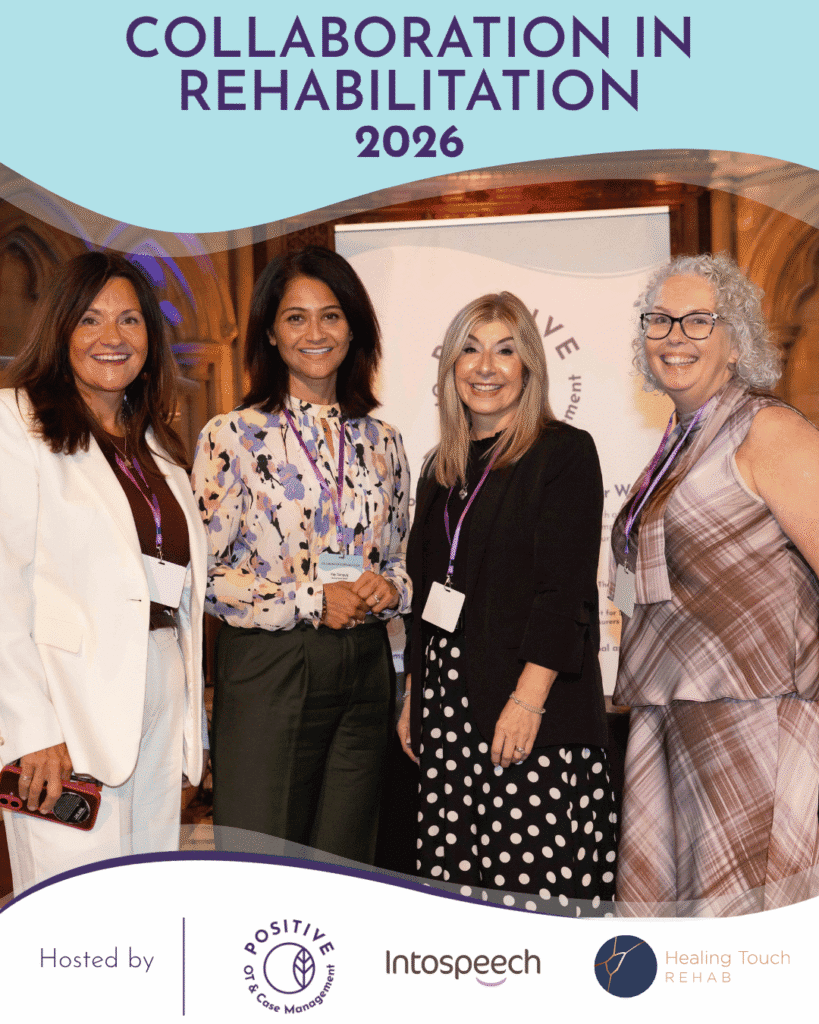
On 15th October 2026, we welcomed professionals from across the rehabilitation sector to St George’s Church, Leeds, for the third Collaboration in Rehabilitation Conference. Hosted jointly with IntoSpeech and Healing Touch Rehab, the conference brought together case managers, therapists, solicitors, support workers, care providers and people with lived experience for a day focused on how we can achieve more by working together. Conversations and connections The day was designed to create a relaxed and welcoming atmosphere, giving delegates the time and space for meaningful conversations, shared learning and new connections across professions and organisations. We have been delighted by the positive feedback received from delegates since the event, with many highlighting the quality of the discussions and the value of connecting with colleagues they might not otherwise meet. Thought-provoking programme The programme brought together a wide range of perspectives, from legal and clinical professionals to people who have lived through rehabilitation themselves. The morning opened with Ross McWilliams and Jo Fraser of Irwin Mitchell, who explored how solicitors, deputies and multidisciplinary teams can work together to deliver better outcomes. This was followed by a multidisciplinary panel discussion built around a real case example, with contributions from occupational therapy, speech and language therapy, physiotherapy, education, care and case management. Support worker recruitment and retention was another key theme, with a practical session on building and keeping directly employed care teams. In the afternoon, Beth Sanders (Leigh Day), Matt Perkins (Keoghs) and Jon Brierley (Allianz) brought claimant, defendant and insurer perspectives together to discuss collaborative working in complex claims. Some of the most powerful moments of the day came from speakers with lived experience. Philip Allen shared his personal story in “Phil v2.0: a survivor’s story”, and Chris Stevens joined Claire Farrington-Douglas of Headway London to explore return to roles for people with acquired brain injury through project-based interventions. Accessible Inclusive Music (AIM) also gave delegates an inspiring insight into the power of music, connection and creativity. We would like to thank every one of our speakers for giving their time and sharing their knowledge and experiences so generously. Collaboration in action The conference highlighted how the best outcomes for individuals and families come when professionals and organisations share their expertise and work together. Rehabilitation rarely sits with one discipline or one organisation. By building stronger relationships between solicitors, case managers, therapists, care providers and the people they support, we can improve both the rehabilitation experience and its outcomes. Supporting two fantastic charities At the conference, we raised….. and are delighted to share that this will be donated to two chosen charities: Accessible Inclusive Music (AIM), which creates accessible and inclusive musical opportunities for children and young people in West Yorkshire and beyond. Thank you We would like to thank our co-hosts, IntoSpeech and Healing Touch Rehab, St George’s Church Leeds for providing such a welcoming venue, and all of our speakers and delegates for their time, insight and enthusiasm. We are also very grateful to our sponsors for their generous support: Thank you, too, to our exhibitors for their contribution to the day: Independence Mobility, EA Mobility, Second Skin, Premium Care Solutions, STEPS Prosthetics, STEPS Rehabilitation and Vivid Care. Collaboration in Rehabilitation Conference 2027 We are already looking forward to next year and will announce the date for the fourth Collaboration in Rehabilitation Conference shortly. Watch this space!
Positive OT & Case Management Shortlisted for Personal Injury Awards 2026
Following the recent news that the team have been recognised for the Outstanding Complex Care Provider category at the Neurological and Complex Care Awards 2026, they are thrilled to have also been shortlisted for their work in ‘Supporting the Industry’ at the national Personal Injury Awards 2026. Their multidisciplinary team supports the UK personal injury sector with Occupational Therapy, Case Management, Support Management and Rehabilitation Support Work services, working with families, legal professionals, deputies, statutory services, education providers and wider multidisciplinary teams to coordinate rehabilitation that is practical, person-centred and outcome-focussed. Founder Jackie Chappel says “To have been shortlisted for this award against some of the leading service providers in the country is just amazing and I am so proud of my team and everything they have achieved. Everything we do supports the PI sector so this award truly reflects our dedication to helping over 200 adults and children with complex injuries and disabilities, helping them to achieve meaningful, life-changing goals.” The team look forward to celebrating with their industry peers at the ceremony which takes place on the 26th November in Manchester. We’d like to wish the very best of luck to all those shortlisted, and congratulate everyone recognised for their contribution to the sector.
How Positive OT & Case Management supports people with cerebral palsy and their families
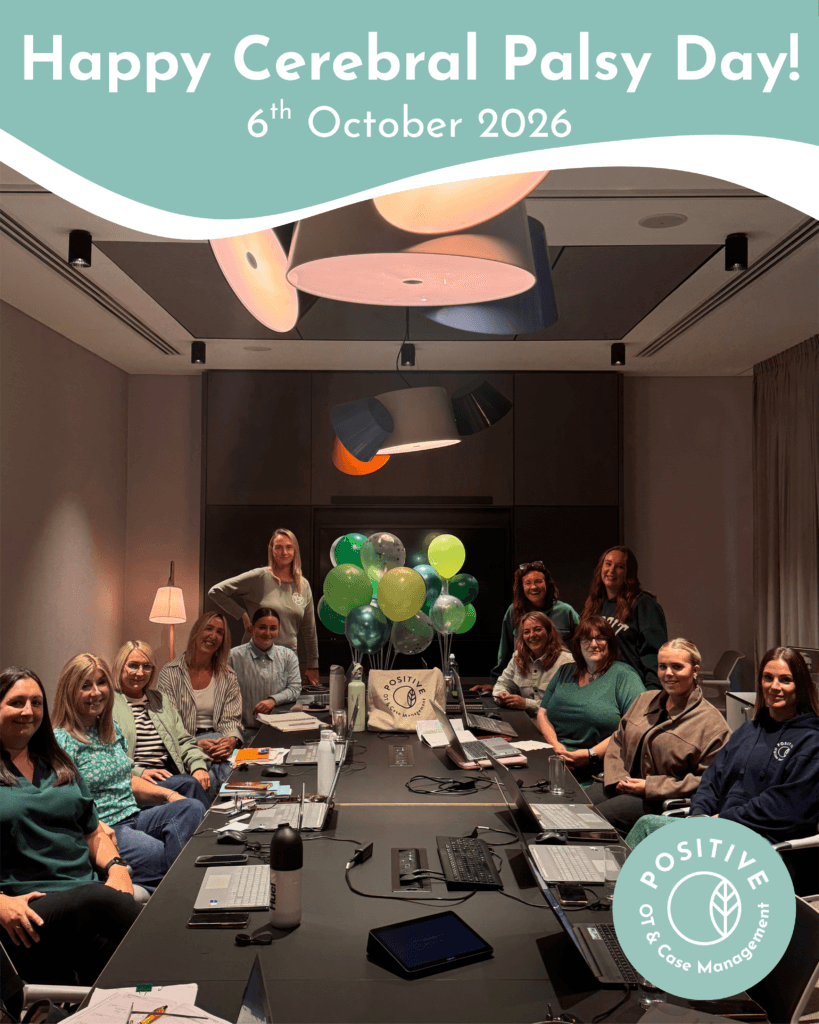
On 6 October, people around the world mark World Cerebral Palsy Day. It is a day to celebrate the achievements of people living with cerebral palsy (CP), raise awareness of what the condition means day to day, and call for a world where everyone has the opportunity to take part fully in their community. At Positive OT & Case Management, this is something we are committed to all year round. We support children, young people and adults with cerebral palsy, working alongside them and their families to understand what matters most to them. Our support is tailored to each person’s needs, preferences and goals, helping them participate in everyday life and enjoy greater choice and control over how they live it. Every experience of cerebral palsy is different Cerebral palsy is a lifelong condition that affects movement, posture and coordination. It is caused by differences in the developing brain, usually before, during or shortly after birth. While the brain injury itself does not change, the way CP affects a person can change over time as they grow, age and move through different stages of life. No two people with cerebral palsy have the same experience. Some people walk independently, while others use a wheelchair or other mobility aids. Some may also experience differences in communication, eating and drinking, vision, learning, or fatigue and pain. This is why we never take a one-size-fits-all approach. At Positive OT & Case Management we start with the person: their strengths, their ambitions and the things they want to be able to do and we use our expertise across case management and occupational therapy to help them achieve their goals. Cerebral Palsy Case Management: bringing the right support together Living with cerebral palsy can mean being supported by many different people at once: therapists, doctors, care teams, schools, social care, housing providers and equipment services. Keeping track of who does what, and making sure everyone is working towards the same goals, can feel like a full-time job for families. Our case managers take on that coordinating role. They act as a consistent, trusted point of contact, helping the person and their family navigate what can be a complex network of professionals. Families are at the heart of this, and we work in partnership with them, so they feel listened to, informed and supported. Our case management support includes: The result is joined-up support that reduces pressure on families and keeps the person’s wishes at the centre of every decision. Cerebral Palsy Occupational therapy: making everyday life work Occupational therapy is about the everyday activities, or “occupations”, that give life meaning. For a child, that might be playing, learning at school or getting ready in the morning. For an adult, it could be cooking, working, socialising or getting out and about in the community. Our occupational therapists focus on the activities that matter to each person. We assess how their abilities, their environment and the support around them affect their participation, then work with them to find practical solutions. These can include: Whatever the goal, our aim is the same: to help each person do more of the things they need and want to do, in the way that suits them best. Support worker recruitment and management: building a consistent team For many people with cerebral palsy, support workers are a central part of daily life. A reliable, well-matched team can open up opportunities, from attending school and holding down a job to enjoying hobbies and seeing friends. Getting it right takes care and ongoing attention. We help recruit, train and manage support workers around the individual’s needs and their family life. This includes: Because we work closely with therapists, our support workers understand how to put therapy recommendations into practice during everyday routines. That might mean using equipment correctly, following a positioning programme or encouraging a particular skill during mealtimes or play. The aim is reliable, respectful support that promotes the person’s choices and participation, while helping families feel confident in their team. Support that grows with the person Case management, occupational therapy and support worker management are most powerful when they work together. Our case managers keep the bigger picture in view, our occupational therapists find practical ways to make everyday life work, and well-supported teams help turn those plans into daily reality. Because cerebral palsy is lifelong, we take a long-term view. We are there through childhood, the teenage years and into adulthood, adapting support as needs, goals and circumstances change. Above all, we listen to the people we support and their families, because they are the experts in their own lives. This World Cerebral Palsy Day, we celebrate the people with cerebral palsy we are privileged to work with, and the families, carers and professionals who support them every day. If you or someone you support has cerebral palsy and would like to find out how Positive OT & Case Management could help, please contact our team. We would be happy to talk through your needs and how we can work together.
Positive OT & Case Management Shortlisted for National Care Award
Positive OT & Case Management (POTCM) is delighted to announce that it has been shortlisted for the Outstanding Complex Care Provider category at the Neurological and Complex Care Awards 2026. Based in Yorkshire, POTCM provides Occupational Therapy and Case Management services across the North of England and the Midlands, supporting more than 200 adults and children with complex injuries and disabilities. Through a collaborative, multidisciplinary approach, the organisation delivers tailored rehabilitation programmes that help individuals achieve greater independence, wellbeing, and quality of life. Since its establishment in 2017, POTCM has grown into a team of more than 30 professionals and has built a reputation for delivering person-centred rehabilitation, investing in workforce development, and promoting best practice across the wider sector. Founder Jackie Chappel said: “We are incredibly proud to be recognised as a finalist in the Outstanding Complex Care Provider category. This shortlisting reflects the dedication, compassion and expertise of our entire team, who work tirelessly to support clients with complex needs to achieve meaningful outcomes and live fulfilling lives.” The shortlisting recognises POTCM’s commitment to coordinated, high-quality care, its investment in developing a skilled workforce, and its contribution to advancing standards across the rehabilitation and complex care sectors. The team looks forward to celebrating with fellow finalists at the awards ceremony in London on the 27th October.
The Role of Occupational Therapy: Breaking Tasks Down for Success
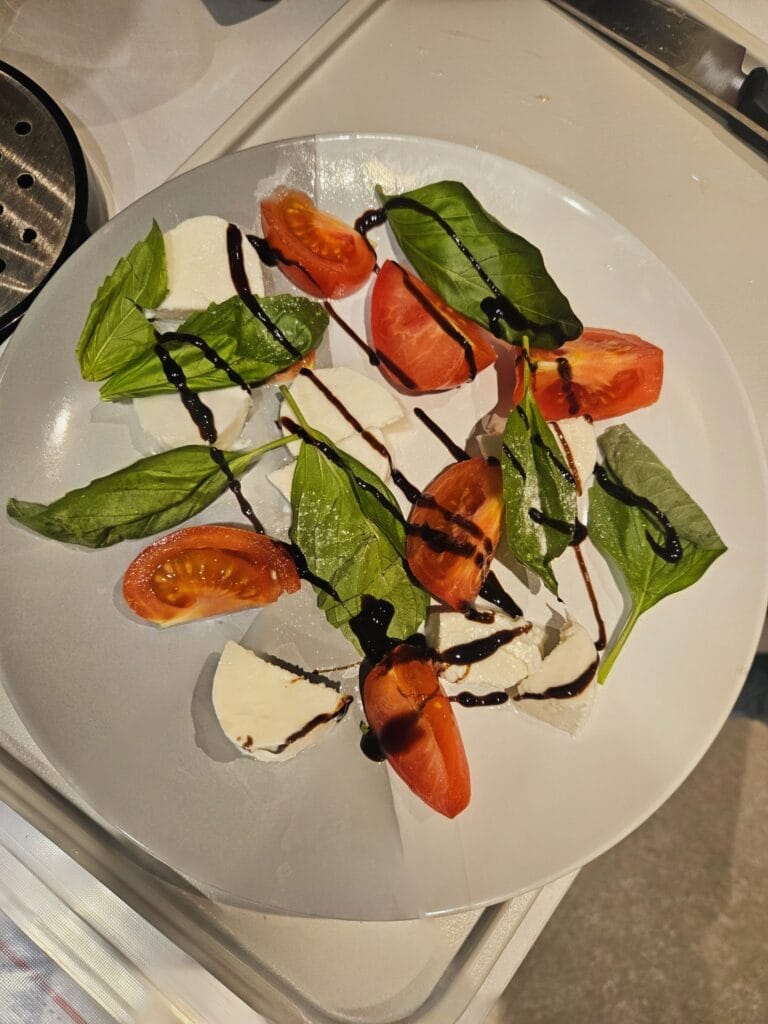
At Positive OT & Case Management, one of the key approaches we use when supporting clients is task grading, breaking larger, complex activities into smaller, more manageable steps. This is particularly effective when supporting individuals with everyday tasks such as meal planning, shopping, and meal preparation. For someone living with a brain injury or a complex condition, a task as seemingly simple as making lunch can involve multiple stages: planning what to eat, checking what ingredients are needed, organising the shop, and then safely preparing the meal. Each stage places cognitive and physical demands on the individual, and when these demands are not broken down, it can quickly become overwhelming. By grading tasks step by step, we help reduce that overwhelm, allowing individuals to focus on one manageable part of the process at a time. Alongside this, we often introduce compensatory strategies, such as checklists, visual planners, or pre-prepared recipe cards, to work around functional limitations and support success at every stage. Occupational Therapist, Kelly Macleod, explains: “We are currently working with one of our clients on breaking larger tasks into smaller, more manageable steps. This is a key occupational therapy approach, particularly when supporting meal planning, shopping, and meal preparation. Grading tasks in this way reduces both cognitive and physical demands, helping individuals stay organised and preventing feelings of overwhelm. Using compensatory strategies, such as checklists, visual planners, or pre-prepared recipe cards, can further enhance independence by working around functional limitations and supporting success at each stage of the process. Together, these approaches promote confidence, efficiency, and meaningful engagement in daily routines. Well done to our client, who is making fantastic progress toward more independent lunch preparation.” These approaches build confidence, promote independence, and help individuals re-engage meaningfully with their daily routines. It is a brilliant example of how the right support, broken into the right steps, can make all the difference.
Positive OT & Case Management expands team to meet growing demand across the North of England

Positive OT & Case Management is delighted to welcome seven new Occupational Therapists and Case Managers to the team, further strengthening the organisation’s ability to support adults and children who have experienced catastrophic and life-changing injuries across the North of England. Joining the team are Sally Hastings, Rebecca Parr, Rachel Taylor, Lauren Cregeen, Kelly Macleod, Jenny Cooper and Beth Thorpe, who collectively bring decades of clinical expertise across neurorehabilitation, paediatrics, catastrophic injury, complex disability, vocational rehabilitation, environmental adaptations and community-based care. Each new team member shares Positive OT & Case Management’s values of compassion, collaboration and empowering individuals to achieve meaningful outcomes following life-changing injury or illness. Meet the new team members Sally Hastings is a highly experienced HCPC-registered Occupational Therapist with over 20 years’ experience supporting adults with complex and long-term conditions. Her expertise includes acquired brain injury, spinal cord injury, stroke, dementia and progressive neurological conditions, alongside extensive experience coordinating complex care packages and supporting individuals to remain independent within their homes and communities. Rebecca Parr is a Senior Occupational Therapist and Occupational Therapist, with over a decade of experience in complex community occupational therapy, rehabilitation and risk management. Rebecca has particular expertise in neurological rehabilitation, environmental adaptations, moving and handling, and developing sustainable systems of care for individuals with complex physical and cognitive needs. Rachel Taylor is an Occupational Therapist and trainee Sensory Integration Practitioner. Rachel has worked across NHS, local authority and private practice settings, supporting children and adults with physical disabilities, birth injuries, amputations, spinal injuries and complex trauma. She is passionate about delivering person-centred rehabilitation and continually developing her skills to provide the best possible outcomes for clients. Lauren Cregeen is a Case Manager and Occupational Therapist, bringing extensive experience managing rehabilitation and care for clients with catastrophic and life-changing injuries. Alongside her case management expertise, Lauren undertakes specialist occupational therapy assessments and is highly experienced in coordinating multidisciplinary rehabilitation programmes and complex support arrangements. Kelly Macleod is an Occupational Therapist and Case Manager. With more than 15 years’ experience across acute, community and neurorehabilitation services, Kelly supports adults and children with traumatic brain injuries, spinal cord injuries and complex neurological conditions. Her collaborative approach ensures rehabilitation programmes are tailored to each client’s goals and aspirations. Jenny Cooper is an Occupational Therapist and Case Manager, bringing specialist expertise in vocational rehabilitation, neurological rehabilitation and complex case management. Jenny has extensive experience supporting people following life-changing injuries and is passionate about helping clients maximise independence and where possible, return to meaningful occupation. Beth Thorpe is an Occupational Therapist with more than 18 years’ clinical experience and a particular specialism in paediatrics. Beth has spent the last 14 years supporting infants, children and young people with complex developmental, neurological and physical needs. Her expertise includes acquired brain injury, cerebral palsy, neuromuscular conditions and sensory processing differences, and she is committed to helping children and families achieve meaningful, long-term outcomes. For more information, please visit our Team page.
Our client, Arron takes on the National 3 Peaks Challenge in Support of Pitt Hopkins UK

Our client, Arron takes on the National 3 Peaks Challenge in Support of Pitt Hopkins UK GoFundMe This July, one of our clients, Arron, will be taking on the National 3 Peaks Challenge alongside his support worker, Garry, to raise funds for Pitt Hopkins UK. Arron, together with his childhood friend Thorne, will attempt to climb the three highest peaks in Scotland, England and Wales, Ben Nevis, Scafell Pike and Snowdon, over the course of three days. The challenge will see them cover approximately 23 miles of mountainous terrain, ascend more than 10,000 feet, and travel around 1,050 miles between locations. For most people, this would be an exhausting physical undertaking. For Arron, it represents something far greater. Arron lives with an acquired brain injury (ABI) and faces daily cognitive and physical challenges that are not always visible to others. These include memory difficulties, reduced motivation, challenges with planning and executive decision-making, communication difficulties, and sensitivity to changes in routine. He also manages physical impacts such as balance difficulties, joint problems, and epilepsy, all of which add further complexity to undertaking a challenge of this scale. Despite these barriers, Arron has developed a strong passion for walking and continually pushing his own boundaries. Over recent years, he has completed a number of endurance walks and personal challenges, demonstrating remarkable determination, resilience and commitment to personal goals. The National 3 Peaks Challenge will test Arron physically, mentally and emotionally. However, he is determined to take on this challenge not only to push his own limits, but also to raise awareness of acquired brain injury and the often unseen challenges faced by those living with it. This challenge also holds deep personal significance for Arron, as he is undertaking it in support of his goddaughter, Chaeli (Thorne’s daughter), who has a diagnosis of Pitt-Hopkins syndrome. With the support of his support worker, Garry throughout the journey, Arron is aiming not only to complete the challenge, but also to inspire others and highlight what can be achieved with the right support in place. We are incredibly proud of Arron for taking on this challenge and would warmly welcome support from colleagues, friends and the wider community. In particular, we invite others to join and cheer Arron on during the final climb up Snowdon on 24th July, including Positive Support staff and those who have been part of his rehabilitation journey. Any donations, large or small, will help raise vital funds for Pitt Hopkins UK and provide encouragement to Arron as he takes on this extraordinary challenge.