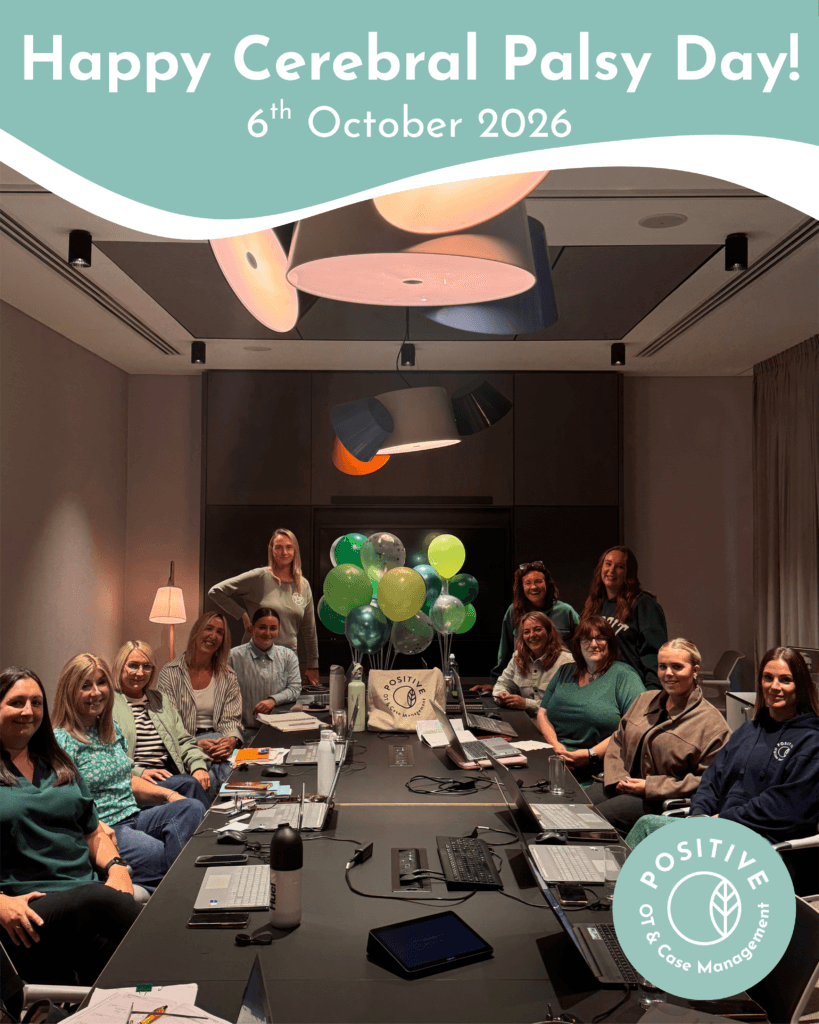
On 6 October, people around the world mark World Cerebral Palsy Day. It is a day to celebrate the achievements of people living with cerebral palsy (CP), raise awareness of what the condition means day to day, and call for a world where everyone has the opportunity to take part fully in their community.
At Positive OT & Case Management, this is something we are committed to all year round. We support children, young people and adults with cerebral palsy, working alongside them and their families to understand what matters most to them. Our support is tailored to each person’s needs, preferences and goals, helping them participate in everyday life and enjoy greater choice and control over how they live it.
Every experience of cerebral palsy is different
Cerebral palsy is a lifelong condition that affects movement, posture and coordination. It is caused by differences in the developing brain, usually before, during or shortly after birth. While the brain injury itself does not change, the way CP affects a person can change over time as they grow, age and move through different stages of life. No two people with cerebral palsy have the same experience. Some people walk independently, while others use a wheelchair or other mobility aids. Some may also experience differences in communication, eating and drinking, vision, learning, or fatigue and pain. This is why we never take a one-size-fits-all approach. At Positive OT & Case Management we start with the person: their strengths, their ambitions and the things they want to be able to do and we use our expertise across case management and occupational therapy to help them achieve their goals.
Cerebral Palsy Case Management: bringing the right support together
Living with cerebral palsy can mean being supported by many different people at once: therapists, doctors, care teams, schools, social care, housing providers and equipment services. Keeping track of who does what, and making sure everyone is working towards the same goals, can feel like a full-time job for families.
Our case managers take on that coordinating role. They act as a consistent, trusted point of contact, helping the person and their family navigate what can be a complex network of professionals. Families are at the heart of this, and we work in partnership with them, so they feel listened to, informed and supported.
Our case management support includes:
- Understanding needs and setting meaningful goals. We take time to get to know the person and their family, identify their support needs and agree goals that reflect what matters to them, whether that is making a new friend, going to college or managing a morning routine more independently.
- Bringing the team together. We coordinate therapists, care teams, education professionals and other services so that everyone shares information and works in the same direction.
- Accessing equipment, accommodation and care. We help secure the right equipment, suitable housing and appropriate care, working with funders and providers to keep things moving.
- Planning for change. Life transitions such as starting nursery or school, moving into adulthood, leaving home or changes in family circumstances can be particularly significant. We plan ahead so that support is in place when it is needed.
- Keeping support under review. Needs and priorities develop over time. We regularly review how things are working and adapt the support as the person grows and their goals evolve.
The result is joined-up support that reduces pressure on families and keeps the person’s wishes at the centre of every decision.
Cerebral Palsy Occupational therapy: making everyday life work
Occupational therapy is about the everyday activities, or “occupations”, that give life meaning. For a child, that might be playing, learning at school or getting ready in the morning. For an adult, it could be cooking, working, socialising or getting out and about in the community.
Our occupational therapists focus on the activities that matter to each person. We assess how their abilities, their environment and the support around them affect their participation, then work with them to find practical solutions. These can include:
- Equipment, seating and adaptations. The right wheelchair, seating system, bathing equipment or home adaptation can make a real difference to comfort, posture, safety and independence.
- Strategies for everyday routines. We help people develop skills and find new ways of doing things, from dressing and eating to managing fatigue and planning the day.
- Accessible homes and environments. We advise on adapting existing homes, assessing new properties and making schools, workplaces and community spaces more accessible.
- Guidance for families and support workers. Recommendations only work if they fit into real life. We show families and support workers how to carry them into daily routines, so progress continues between therapy sessions.
Whatever the goal, our aim is the same: to help each person do more of the things they need and want to do, in the way that suits them best.
Support worker recruitment and management: building a consistent team
For many people with cerebral palsy, support workers are a central part of daily life. A reliable, well-matched team can open up opportunities, from attending school and holding down a job to enjoying hobbies and seeing friends. Getting it right takes care and ongoing attention.
We help recruit, train and manage support workers around the individual’s needs and their family life. This includes:
- Matching staff to the person. We look beyond qualifications to personality, shared interests and the qualities that matter to the person and their family.
- Coordinating training. We make sure support workers have the skills they need, including any specific training linked to the person’s health, moving and handling, or communication.
- Providing supervision. Regular supervision gives support workers guidance and support, and helps maintain high standards.
- Reviewing how support is working. We check in with the person, their family and the team, and make changes when something is not working as well as it could.
Because we work closely with therapists, our support workers understand how to put therapy recommendations into practice during everyday routines. That might mean using equipment correctly, following a positioning programme or encouraging a particular skill during mealtimes or play.
The aim is reliable, respectful support that promotes the person’s choices and participation, while helping families feel confident in their team.
Support that grows with the person
Case management, occupational therapy and support worker management are most powerful when they work together. Our case managers keep the bigger picture in view, our occupational therapists find practical ways to make everyday life work, and well-supported teams help turn those plans into daily reality.
Because cerebral palsy is lifelong, we take a long-term view. We are there through childhood, the teenage years and into adulthood, adapting support as needs, goals and circumstances change. Above all, we listen to the people we support and their families, because they are the experts in their own lives.
This World Cerebral Palsy Day, we celebrate the people with cerebral palsy we are privileged to work with, and the families, carers and professionals who support them every day.
If you or someone you support has cerebral palsy and would like to find out how Positive OT & Case Management could help, please contact our team. We would be happy to talk through your needs and how we can work together.